
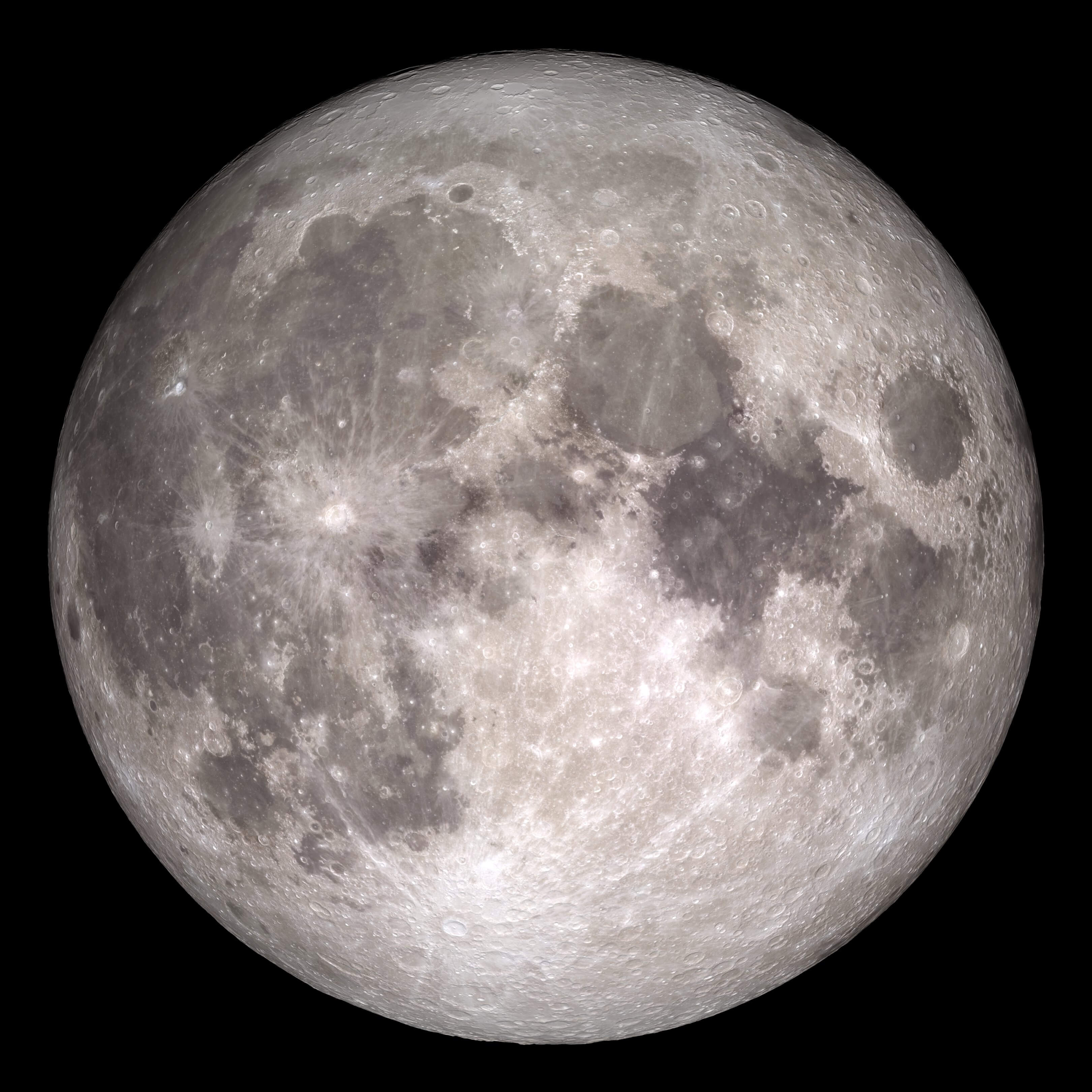
Credit: NASA
As some of you are no doubt aware, SpaceX recently launched a two for one special to the Moon last week, carrying into space Firefly’s Blue Ghost lander alongside ispace’s second Hakuto-R lander.
Some of you may even know that each spacecraft, despite being launched on the same rocket, are taking very different periods of time to get to their destination. Blue Ghost is scheduled to touch down in March, whereas Hakuto-R is scheduled for sometime in April at the earliest.
Back in the days of Apollo, getting astronauts to the Moon took around 3 days, as opposed to the weeks and months that modern spacecraft take.
Why is there such a wide variety of time frames to get to the same place?
The short answer is fuel, and the long answer lies in explaining some quirks of orbital manoeuvring.
The Hohmann Transfer

Credit: NASA
First on the list of transfers is the good old Hohmann Transfer. This is the simplest, fastest method to get to the Moon.
Simply put, this transfer raises a spacecraft’s orbit to intersect with the Moon’s, and thus both bodies meet each-other in space. From here, a spacecraft will slow itself down relative to the Moon, putting itself in a stable orbit.
Time is the key benefit of this manoeuvre, as it is by far and away the fastest way to reach the desired destination. Fragile Humans that require food, water and breathable air are one reason why you might choose this transfer method, and was what the Apollo missions opted to do.
The main drawback is that this is the hungriest transfer in terms of fuel used, as it doesn’t use any clever tricks that the following examples employ.
The Oberth Effect

Credit: NASA
Orbital mechanics throws up a few counter-intuitive and seemingly physics-bending concepts, and one of these is happily exploited by many budding lunar landers.
The Oberth Effect is a phenomenon in which a spacecraft at speed, burning the same amount of fuel with the same specific impulse (engine efficiency), will gain more kinetic energy than the same spacecraft at a lower initial speed. In practice, this means that a spacecraft moving at speed is more fuel efficient the faster it travels.
This may seem like “free energy” but the mathematics makes sense once you consider the whole system. Essentially, the kinetic energy gained by the spacecraft at higher speeds is balanced out by the loss of more kinetic energy in the exhaust. By contrast, a slower spacecraft imparts more of the kinetic energy gained (by burning fuel) upon the gaseous exhaust of the engines, rather than the spacecraft itself.
There are situations where you’d want to go slowly instead, such as changing the orbital inclination (inertia and all that), but that’s not important for this article.
All that to say, faster = better.
Some lunar landers, such as Chandrayaan 3 and Blue Ghost, utilise this effect by making multiple, smaller burns over several orbits to increase their Apoapsis (highest point of orbit), and as such fall faster and faster back towards Earth each time. As you may have figured out by now, they then burn their engines at these faster speeds to reach the moon using less fuel than something like the Hohmann Transfer. You still have to slow the spacecraft down once you reach the moon, however.
This method takes much longer than a Hohmann Transfer, but has the key distinction of being more fuel efficient.
If time is no question, and you want to save just that little extra fuel, there is one other way.
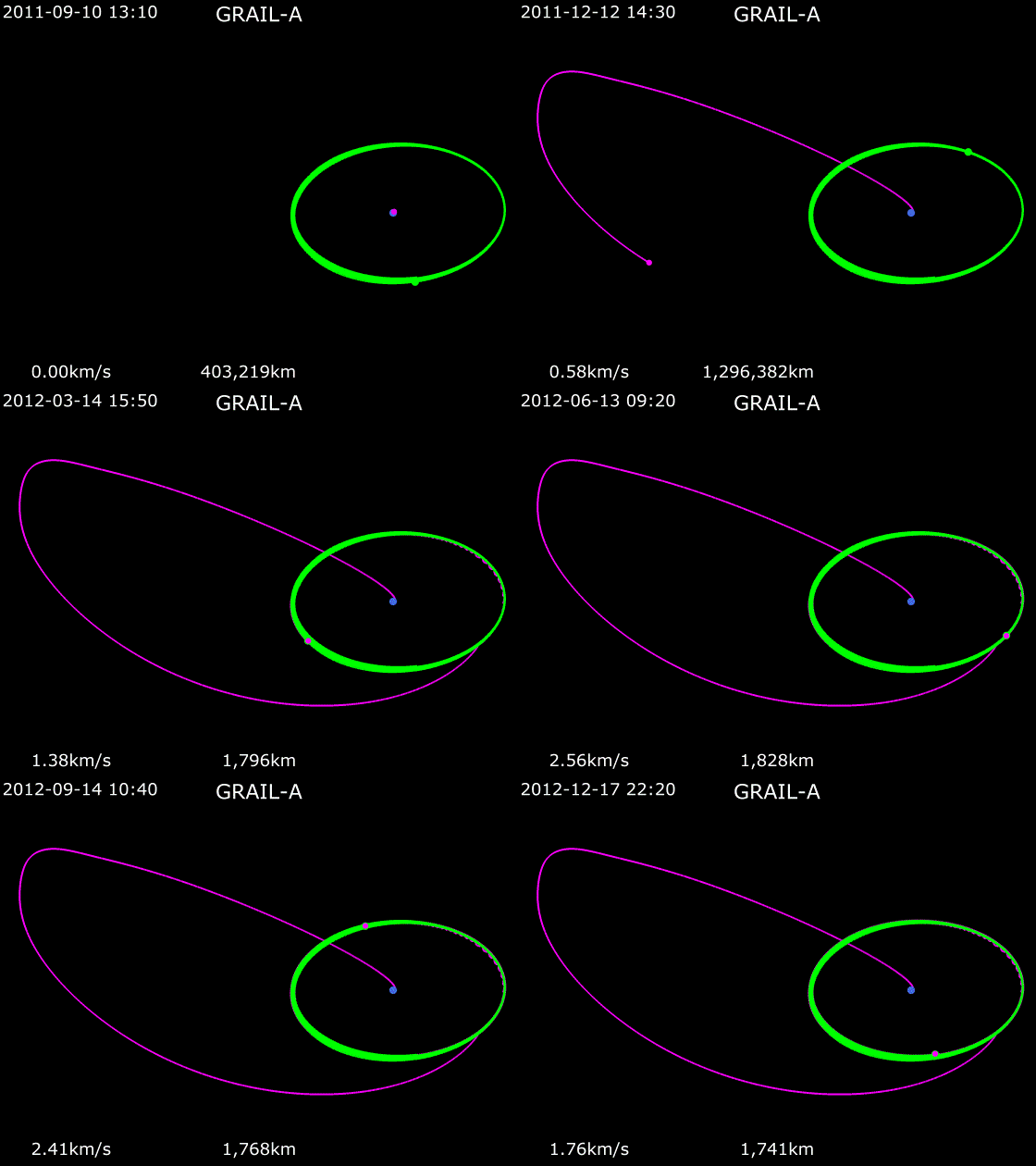
Ballistic Capture
Credit: NASA
When patched conics goes to sleep at night, it has nightmares. Lagrange points, orbital decay, and yes, ballistic capture.
Terrifying, but what is it?
Ballistic capture is the answer to the question:
“What if I want to get to the moon, and arrive with the lowest possible insertion burn?”
As you are most definitely aware, the Earth and Moon orbit the Sun, and this fact makes this transfer possible.
A spacecraft on a ballistic capture can exploit the gravitational forces between the Earth and Sun to propel itself into a trajectory which gives it a similar enough orbital velocity (speed and direction) to be captured by the Moon’s gravity, without the need to slow down significantly once there.
In order to accomplish this, a spacecraft must, in contrast to the previous transfers, fly right past the Moon’s orbital path and towards the boundary where the Earth’s gravitational force becomes subservient to that of the Sun. Once there, the gravitational forces imparted upon it raise the Periapsis (lowest point of orbit) of the spacecraft to intersect the Moon’s orbit. Finally, the spacecraft falls down to this point as the Moon reaches the same spot, and the gravitational pull of the Moon captures the spacecraft.
As the spacecraft fell such a long distance, it gained speed, the result of which gives it a similar enough velocity to the Moon, and so a burn to slow itself down significantly once at the Moon is not required. At most, some smaller, much less fuel-expensive burns are used to keep the capture stable and to adjust the trajectory during flight.
This transfer has the longest travel time, but can be the most fuel efficient. It’s also the coolest, in this writer’s humble opinion.
That’s All
Hopefully you understand some more of the nuances of getting from the Earth to the Moon, and can appreciate the careful planning and engineering that goes into making all these amazing things happen.
I hope Firefly and ispace have successful lunar landings, and are able to send back plenty more pretty pictures for us to all gawk at:
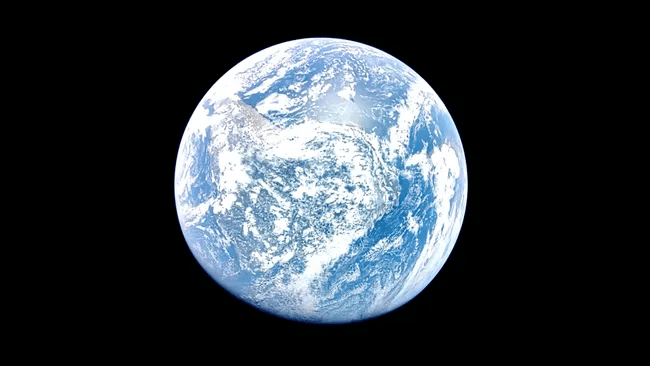
Credit: Firefly Aerospace
See you all next week!
 Weekly Voyager
Leave a comment