
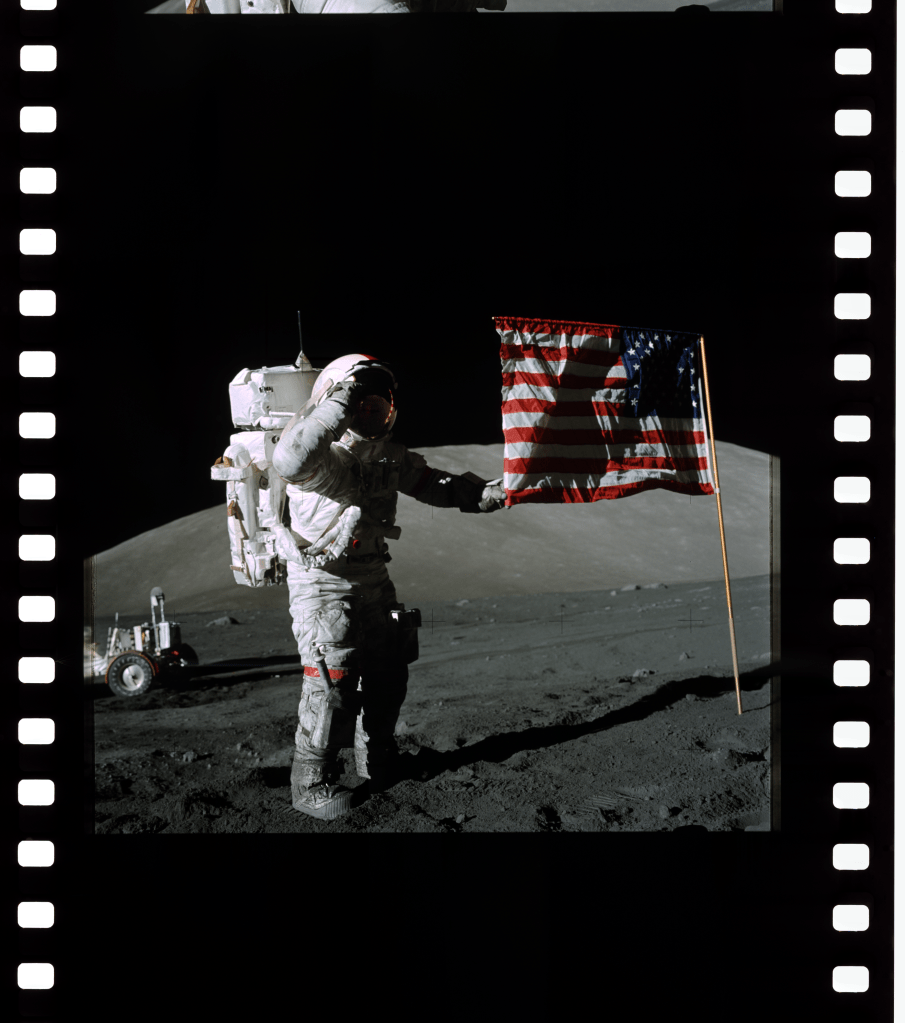
Gene Cernan salutes the American flag on the surface of the Moon. | Credit: NASA
It’s Never Been Easier to Lie
We live in an age of misinformation, fabrication and fraud.
As you may have noticed if you follow me on X, I have a strong distain for those who spread conspiracy. More often than not, the people who share this nonsense are typically uninterested in actual enquiry. Instead, they’re intentionally lying for some sort of personal benefit, or are so indoctrinated into their beliefs that no amount of evidence and critical thinking can get through to them.
In the modern social media age, it has unfortunately become nigh on impossible to escape those looking to deceive, or who are deceived themselves. Conspiracy theories and pseudoscientific thinking has become, in my mind, a pandemic proportioned social poison. It is common now to encounter people who believe in one conspiracy or another.
- Princess Diana? Assassinated.
- COVID-19? Leaked from a lab.
- Airlines? Spreading chemtrails.
One antidote to this poison is to employ some basic critical thinking. A few questions go a long way:
- Why would you try to assassinate Diana by means of a car crash? It is not a reliable method. What if she survived?
- Why were independent researchers allowed inside the lab that COVID supposedly leaked from, and why did they conclude that this theory is bunk?
- Why would a top secret chemtrail program spread chemicals that are easy to spot from the ground?
Sometimes, a few good questions are all you need to decide if a theory is nonsense. What might seem compelling on the surface is typically full of silly holes that aren’t easily plugged. On other occasions, you might have to do a bit more digging.
One conspiracy theory that exemplifies this, and that also has some relevance to this website, is the Moon landing hoax conspiracy.
We’ve all heard this before from somebody:
“NASA never sent anyone to the Moon, it was staged!”
A compelling story, and one that has trickled down through the decades, inspiring all sorts of movie plots, cutaway gags and “documentaries.”
It, however, is just that. A story.
In this article, I aim to dismantle some of the common arguments I see paraded around by conspiracy theorists. Hopefully those of you on the fence about this topic will see that we did indeed go to the Moon.
The Photos
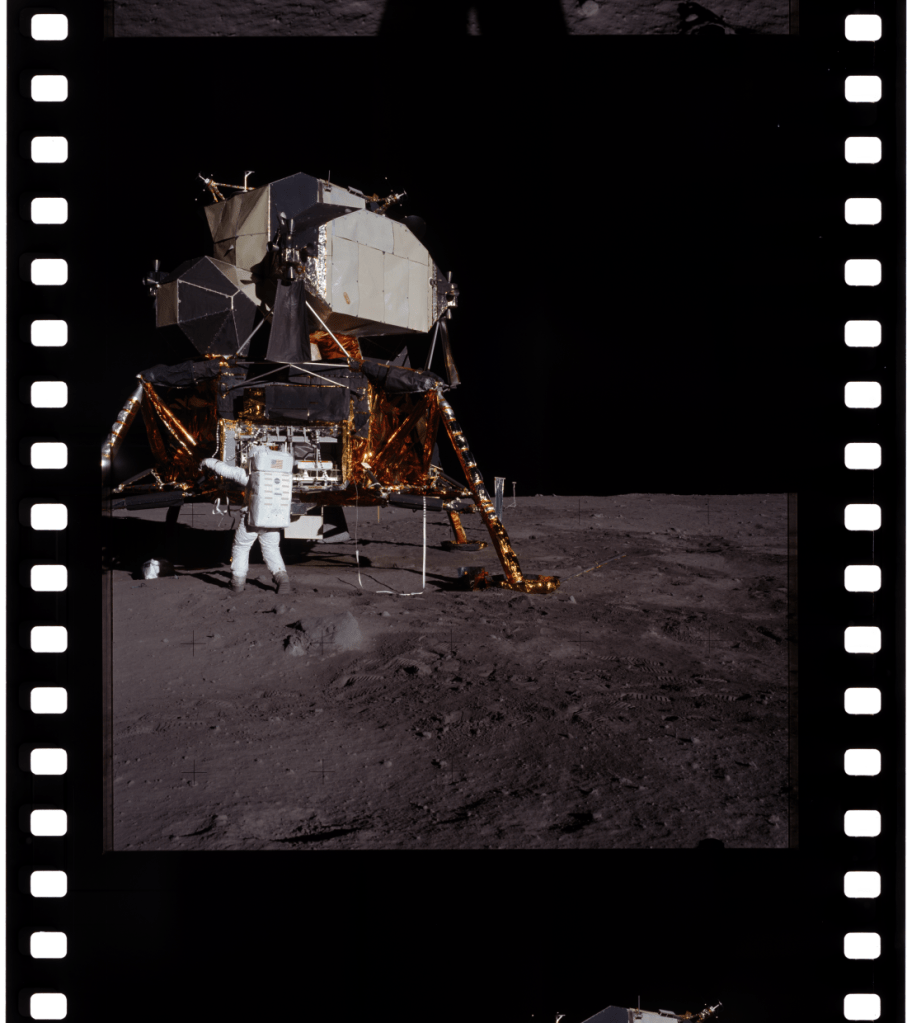
Buzz Aldrin described the lunar surface as having “magnificent desolation.” | Credit: NASA
Ironically, many conspiracy theorists point to one of the strongest pieces of evidence for the Moon landings, to suggest they were faked.
Good old photographs.
Indeed, thousands of film photos were taken on these missions, and are extremely well preserved in digital format. Film, as many photographers will tell you, is capable of capturing an immense level of detail and clarity.
Somebody should tell the conspiracy theorists.
It always seems that those peddling the idea that the landings were a hoax can never find the high quality scans available from sites like March to the Moon. Seemingly out of ritual, the same hyper compressed, low resolution images are shared around, supposedly showing some sort of anomaly that cannot be explained by anything but a hoax.
Observe the following, for example:
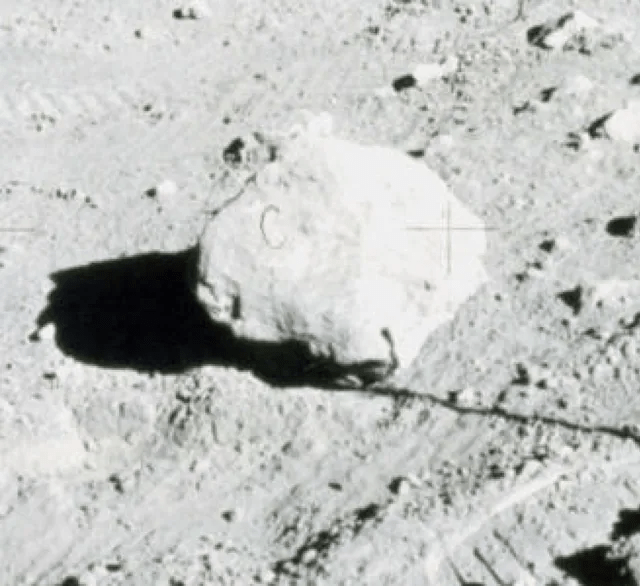
A photo supposedly showing an anomaly. | Credit: NASA
Of course, the first thing you’d notice is the aforementioned image quality, or lack thereof…
Upon closer inspection, another thing stands out. Is that a letter “C” on the rock? Is it perhaps a labelling system to help the stagehands catalogue their prop Moon rocks? That’s what conspiracy theorists would have you believe.
We should check a high quality scan of the original photo to make sure we’re not being deceived:
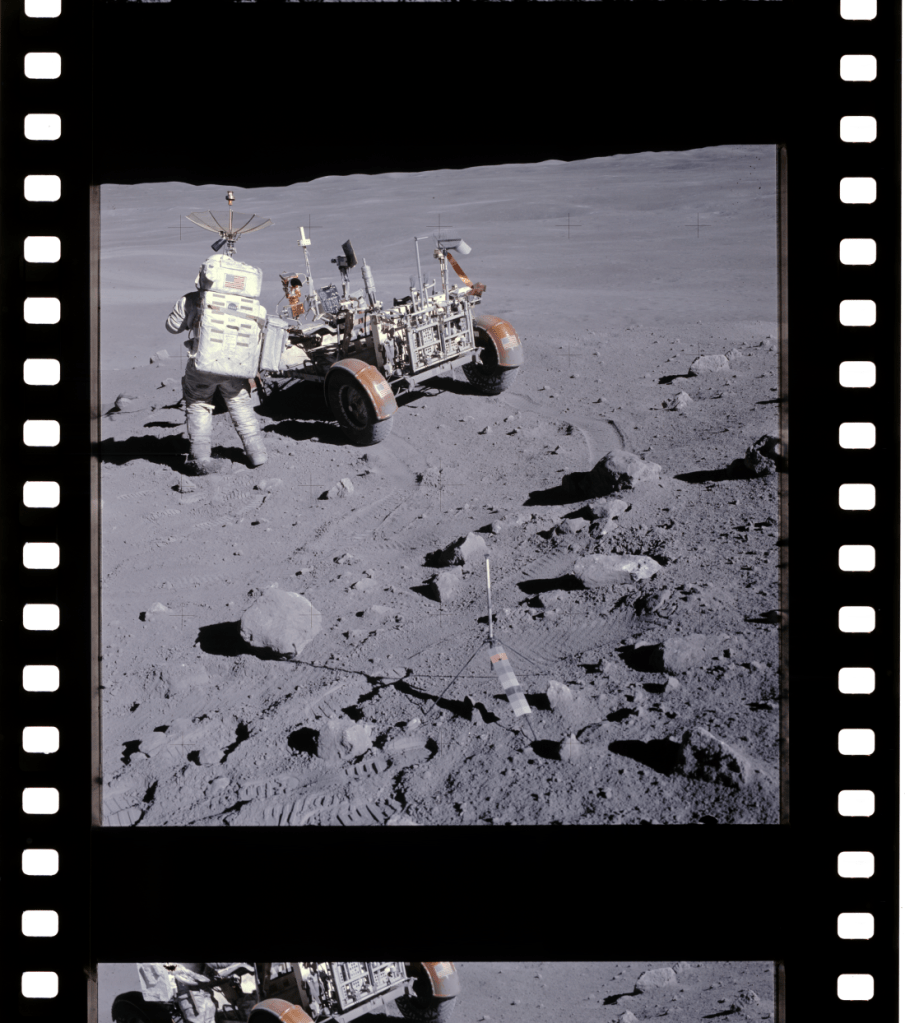
A scan of the original photo that the supposed “prop rock” originates from. The rock in question can be seen in the bottom left quarter of the image. | Credit: NASA
In the famous words of that one South Park bank clerk:

No letter “C” to be found!
Nowadays the most accepted explanation for the source of the “prop rock” image is that it is a poorly executed re-scan, with someone’s hair accidentally getting on the photograph. As a result, it showed up on the image when it was re-scanned.
Many of the conspiracy theorists arguments are in a similar vein to the “prop rock.” Another supposed anomaly, for example, would be the photo crosshairs somehow appearing behind objects:
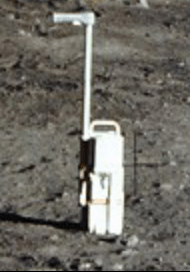
In this cropped image, the crosshairs of the camera’s Réseau plate appear to go behind the piece of equipment. | Credit: NASA
For those not in the know, these crosshairs are present in all Apollo lunar photography, as they are a part of the camera’s design. These lines help the scientists determine if an image has been distorted. Conspiracy theorists will present images like the one above and say that the images must be altered in some way as it is impossible for the crosshairs to go behind objects in an image, which is true.
Once again, this comes down to their inability to find good quality images.
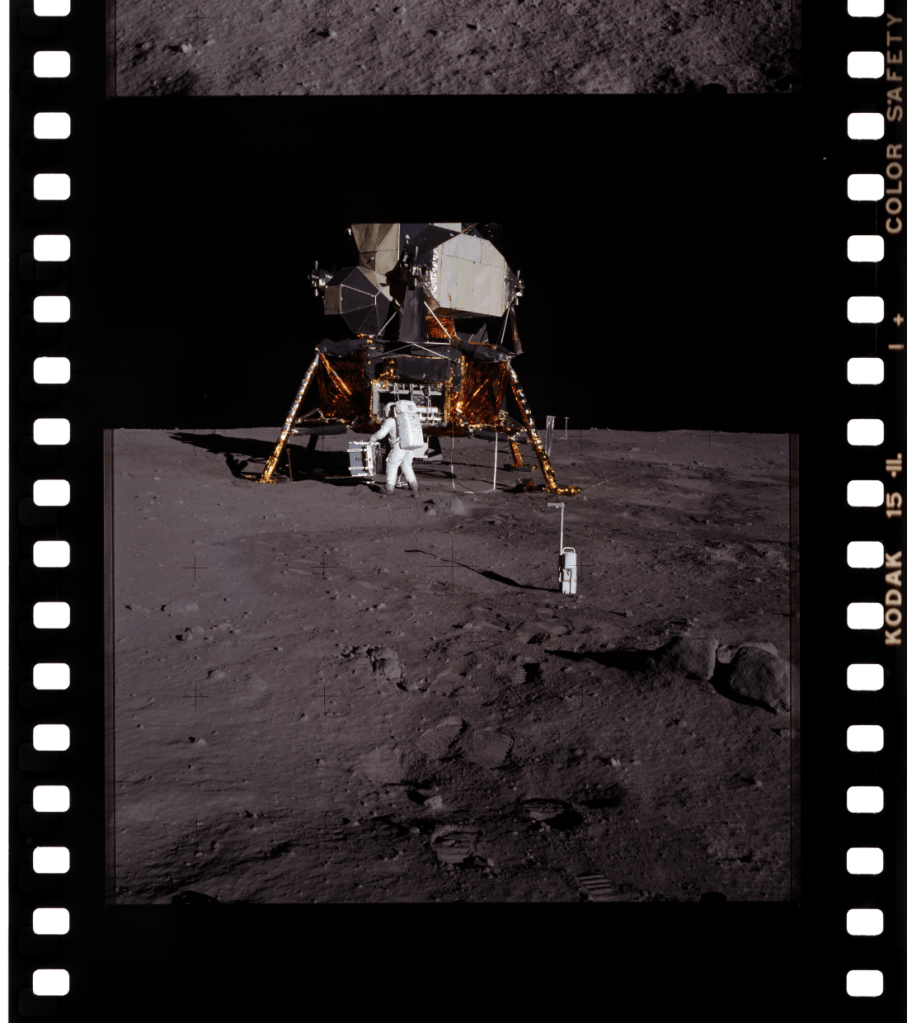
A high quality scan of the image supposedly showing the cameras’ crosshairs going behind the equipment. | Credit: NASA
It’s pretty clear that in the full, high quality scan, the crosshairs do not in fact go behind the equipment.
Once again…
You get the point now.
Many of the points made by the theorists can be explained away by finding a good scan of the image they’re sharing around.
As a last point on photos, I’d like to present the following as evidence that proves the landings happened:

A panorama of the lunar surface, taken on Apollo 12. | Credit: NASA
Various amazing panoramic shots were taken on the Apollo missions, with not a film crew or one Stanley Kubrick in sight.
The Spacecraft
Another common argument made by those who find the Moon landings questionable is born of their personal incredulity.
“How could they go all the way to the Moon in that? It looks like it was made from tin foil!”
Indeed, the lunar module, the bit you see sitting on the lunar surface, does appear rather flimsy. Upon doing a little research, however, we can understand much more about the lunar landing architecture.
Firstly, the lunar module didn’t make it to the Moon all by itself. It had the help of the mighty Saturn V rocket.
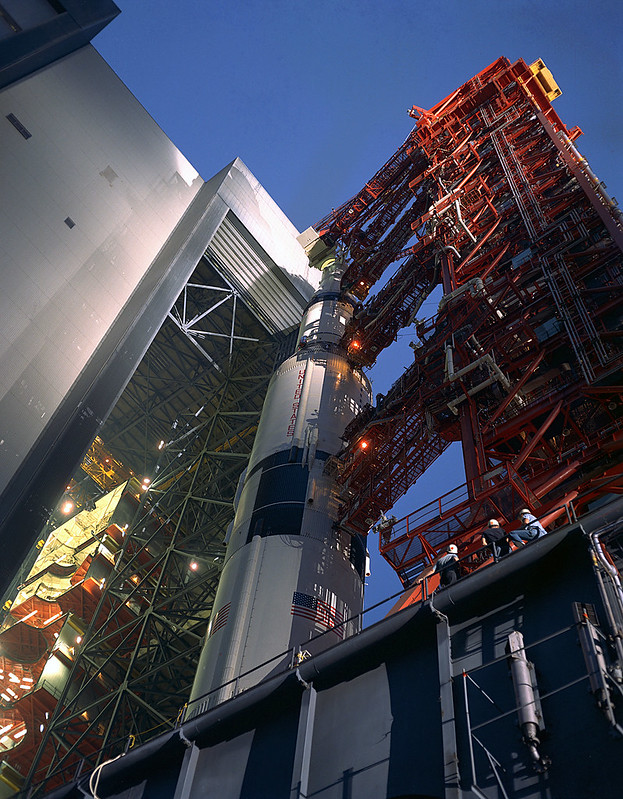
Saturn V for Apollo 12 on the transporter. | Credit: NASA
To leave Earth and shoot for the Moon, the Saturn V was constructed. A truly massive rocket, the Saturn V held the record for most the powerful rocket ever flown from 1967 until 2023.
Straddled atop the might of this rocket were the spacecrafts needed to land on, and return from, the Moon.
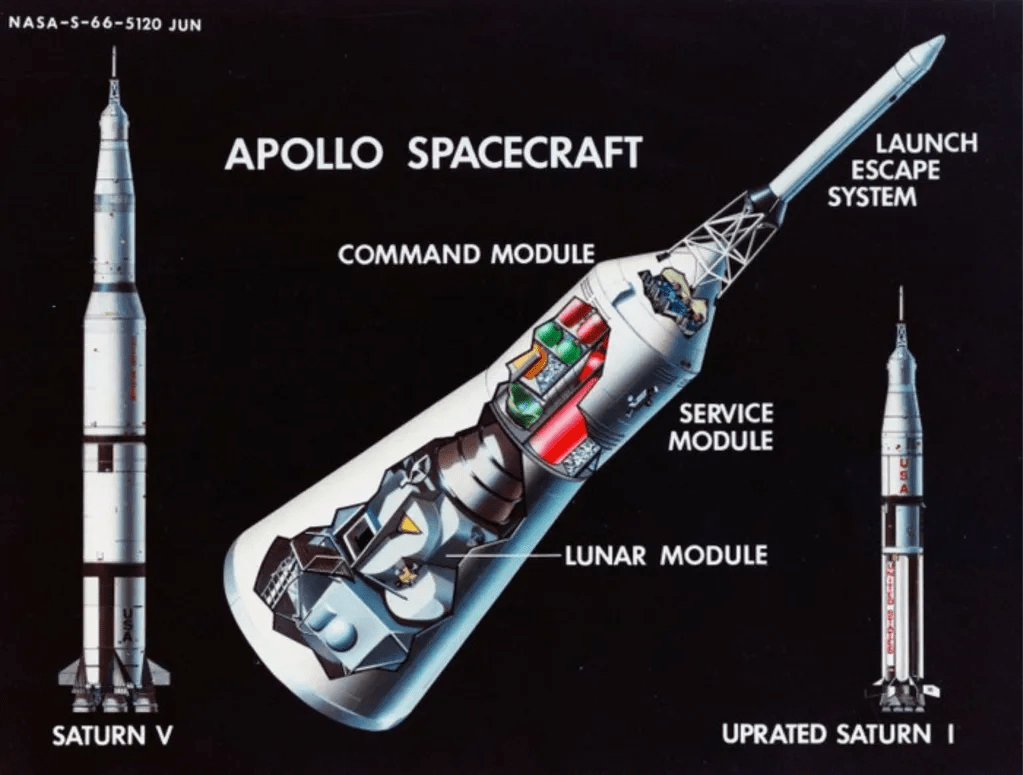
A diagram showing the configuration of the lunar module and command & service module (CSM). | Credit: NASA
As shown, the lunar module was tucked away comfortably inside the fairing of the Saturn V, and was only deployed once on the way to the Moon. The CSM would detach itself from the lunar module, turn around, and dock with it. This allowed the astronauts to move between each module, and allowed the CSM to push the lunar module along during course corrections. Once at the Moon, the lunar module would undock and land with two astronauts.
So then, why does it look so flimsy in all those pictures?
Never judge a book by its cover is an apt saying here.
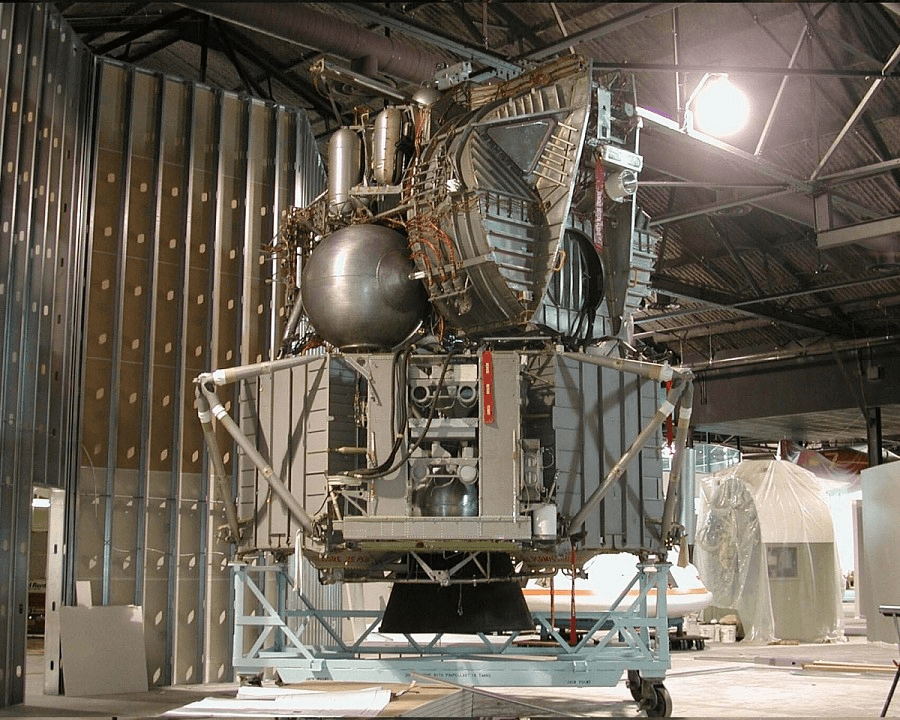
A lunar module during construction. | Credit: Smithsonian National Air and Space Museum
Plenty of images exist showing the lunar module in various states of construction, giving us a look into the workings beneath the skin. As you may well agree, it looks rather more robust than it did in all those pictures of it on the Moon.
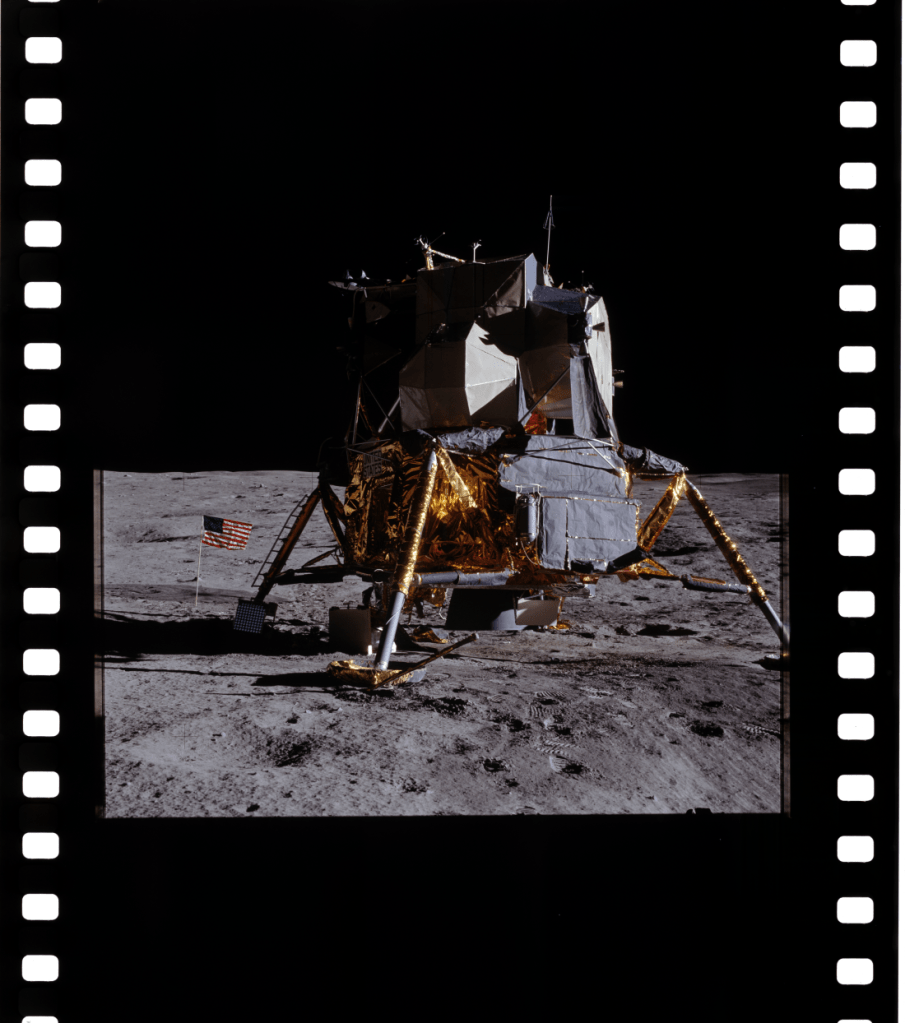
A lunar module on the surface of the Moon. Looks rather thrown together here… | Credit: NASA
Thermal insulation is to blame for the flimsy look. Quite famously, the lunar module sported a golden foil that appears crumpled and rather haphazardly put together. Conspiracy theorists see this and conclude that the look can only be explained by poor 1960’s prop work.
In reality, the foil material was called multi-layer insulation, and it is incredibly good at reflecting radiative heat from the Sun. Crumpling the foil had some benefits such as reducing the contact area with the hull, minimising heat transfer between the two, and also saving weight. Having thicker sheets of uncrumpled insulation would have added additional un-needed weight, which was at a premium in the design of the lunar module.
Hopefully this is enough of an explanation to put to bed the idea that the Apollo spacecrafts were just crappy 1960’s movie props.
Miscellaneous Misunderstandings
A number of the common arguments I see online are so easy to debunk that I wanted to compile them into a rapid fire round of explanatory excellence. Enjoy!
“The flag waves on the Moon. How is that possible without air?”
The flag was held up by a metal rod that folded out, and the adjustments by the astronauts is what makes it appear to wave. It sits still when not being touched. A timelapse video of them putting it up shows this clearly:
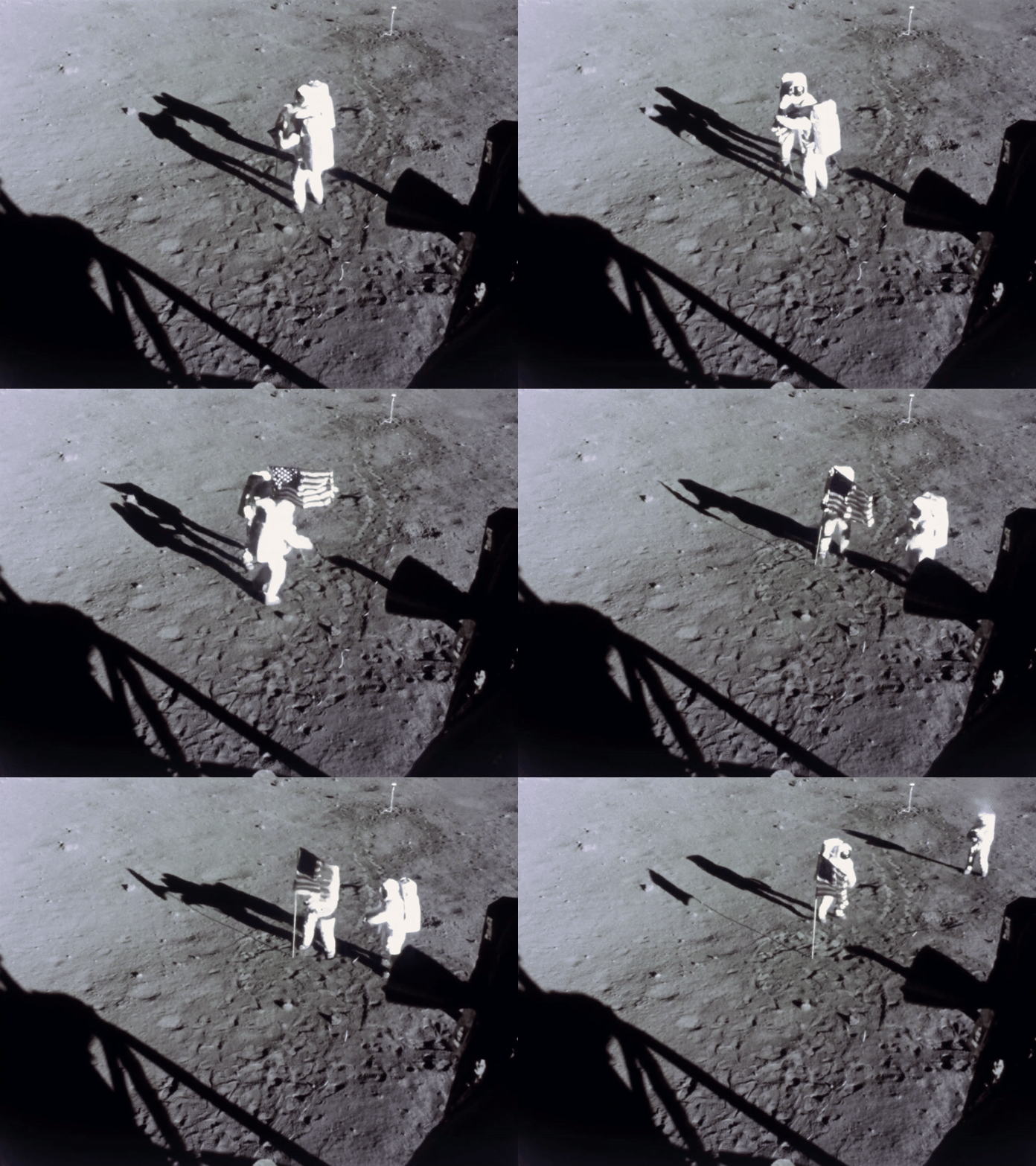
Neil Armstrong and Buzz Aldrin deploying the American flag on the lunar surface. | Credit: NASA
Pretty straightforward, eh?
“How did Nixon call the astronauts on the Moon? He used a landline phone!”
Have you ever held your phone up to a noise so your friend can hear it on the other end of a call? Yeah. That.
Nixon called the spaceflight centre in Houston, and they relayed this through to the astronauts via satellite.
“There’s no crater below the lander! Surely a rocket engine should create a big blast?”
Landing on the Moon does not require as much thrust per kilogram when compared to the Earth (the Moon having only 1/6th of Earth’s gravity). A spacecraft as lightweight as the lunar module did not require much thrust to land.
In addition to this, the engine was throttled down once on final approach as the full thrust of the engine was not needed.
Finally, the plume of the rocket engine expands outwards in a vacuum, and so it is not concentrated in one area on the surface.
Videos do show how lunar dust was pushed away from the bottom of the lander, so the surface was not entirely undisturbed.

Apollo 14 kicking up lunar dust upon nearing the surface. | Credit: NASA
“There’s no stars in the pictures!”
You can’t see stars from Earth during the day, why wouldn’t the same be true on the Moon? A camera exposed correctly for the lunar surface during the day would not pick up starlight.
Anything Else, Theorists?
I know I didn’t cover absolutely everything in this article, but I merely wanted to demonstrate how easy it can be to debunk the things people say online.
If you hear something that sounds a little conspiratorial, asking some logical questions can be a good start, as demonstrated at the start of this article. If that doesn’t satisfy you, finding primary sources like photos and videos can be the next step in uncovering the reality of a situation.
Many conspiracies live and die by the viral images and videos that get shared around on social media. You can reverse image search these to get context and find out more about them. Usually, you’ll find the source of an image is not what the conspiracy theorist says it is.
I hope this was informative and interesting.
It’s good to be back.
See you next week!
 Weekly Voyager
Leave a comment