

Blue Origin’s New Glenn rocket on its debut launch. | Credit: Blue Origin
In this writer’s humble opinion, we as a species are witnessing the dawn of the commercial age of space exploration. NASA’s CLPS program has had its first major success, with Firefly Aerospace successfully landing their Blue Ghost lander on the Moon. Blue Origin made headlines at the start of this year, launching their massive New Glenn rocket for the first time. Finally, SpaceX continue to dominate the industry with Falcon 9 launches, and treat us to us spectacle after spectacle with their Starship test program.
If the commercial space age is to grow at an exponential rate, I believe we’re at a point where the snowball really starts to get going.
With so much happening under so many names, its hard to keep track if you’re just getting into this stuff. As such, I’d like to present three of the biggest names in the industry thus far, and give you a little overview of their launch vehicles, their accomplishments and their ambitions.
Let’s start with the obvious…
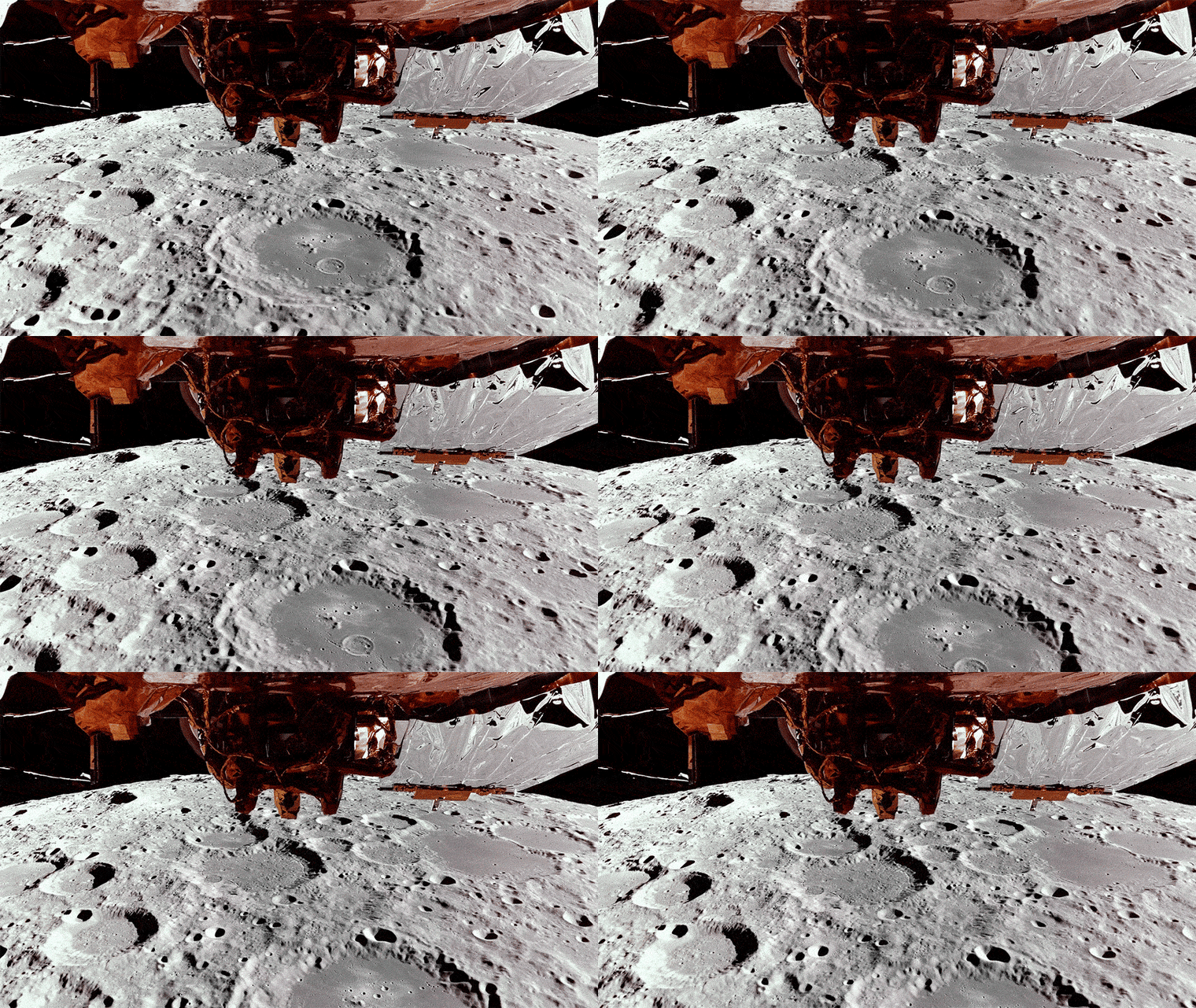
Blue Ghost orbits the Moon. | Credit: Firefly Aerospace
SpaceX
Not mentioning SpaceX in an article about competitors in the space industry would be like omitting Apple from a list of competitors in the smartphone market.
If you think of searching for something, you think of Google.
If you think of editing photos, you think of Photoshop.
Need a satellite launched into orbit? Falcon 9.
SpaceX’s current workhorse, Falcon 9, is the worlds first, and as of writing, only, operational launch vehicle with a re-usable first stage. You’ve probably seen the clips of rockets falling like oversized lawn darts out of the sky, only for their descent to be arrested by a perfectly timed ignition of the engines.
Only SpaceX can do that.
Indeed, this capability is what gives them a competitive edge in the industry. Being able to land and re-launch hardware in such a manner means they can lower launch costs, and ultimately offer better prices for those looking for a ride.

A Falcon 9 first stage landing on an autonomous barge. | Credit: SpaceX
If you need some numbers to back up SpaceX’s market dominance, then I can happily oblige.
In 2024, there were 253 successful orbital launches globally. 133 of these are Falcon 9 rockets alone. That’s more than half the total launches globally.
In the United States, SpaceX at this point basically is the launch market. Of 155 successful orbital launches by the US, 133 of those were Falcon 9.
Crazy numbers indeed.
As many of you are aware, Starship is SpaceX’s next big project, as they aim to create a fully re-usable rocket. This would be a world first, and another re-defining technology for the space industry. You can read more about Starship here.
Finally, SpaceX are currently the only company in the US to fly a fully operational orbital crewed spacecraft. Dubbed Dragon, this spacecraft has been used in the last number of years to take crews to and from the ISS, send tourists into orbit and perform the worlds first private spacewalk.
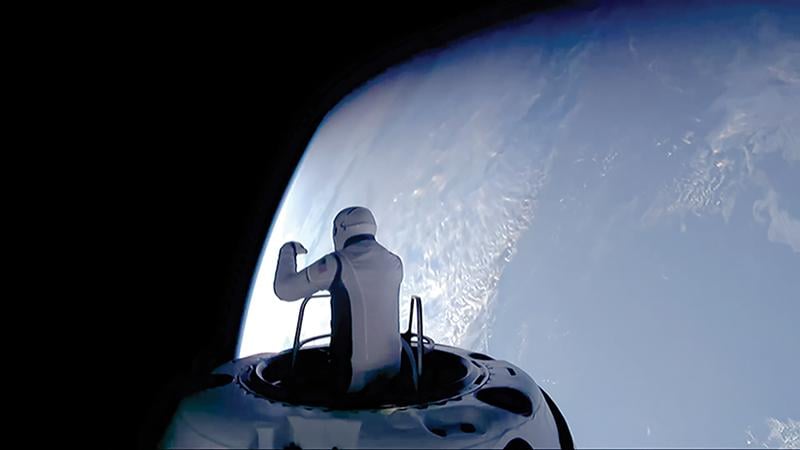
Jared Isaacman performs the first private spacewalk. | Credit: SpaceX
Blue Origin
Some of you may have have heard the recent news about Katy Perry of all people being selected to go to space. Some may even remember when William Shatner of Star Trek fame was sent up, or when a member of YouTube group Dude Perfect was launched into the black.

Shatner in space! | Credit: Blue Origin
Blue Origin are the perpetrators of these star-studded stunts, using their sub-orbital rocket New Shepherd to promote the idea of space tourism. Personally, I’d like a ticket, but I suspect the price point is not exactly cheap…
Founded by Jeff Bezos (yes, that one), Blue Origin has positioned themselves over the past few years as a serious contender in the launch market with regards to re-usable launch vehicles. The aforementioned New Shepherd is a fully re-usable suborbital rocket that can give passengers a thrilling 10-or-so minute ride up into space, and straight back down again.
In the orbital space, their next generation New Glenn rocket aims to capture a slice of the SpaceX pie. Substantially larger and more capable with regard to payload capacity than the Falcon 9, New Glenn has completed its first flight, and is looking to launch more payloads into orbit and beyond throughout its lifetime. Included in this itinerary are satellites for Amazon’s Kuiper satellite network, which, like Starlink, aims to provide space-based internet connections around the world.
Other long-term ambitions for Blue Origin involve their Blue Moon lunar lander, intended to ferry humans to (and from) the surface of our closest celestial neighbour. On top of this, the company also intends to build and operate the Orbital Reef space station, which could house space tourists and scientists for on-orbit holidaymaking or research.
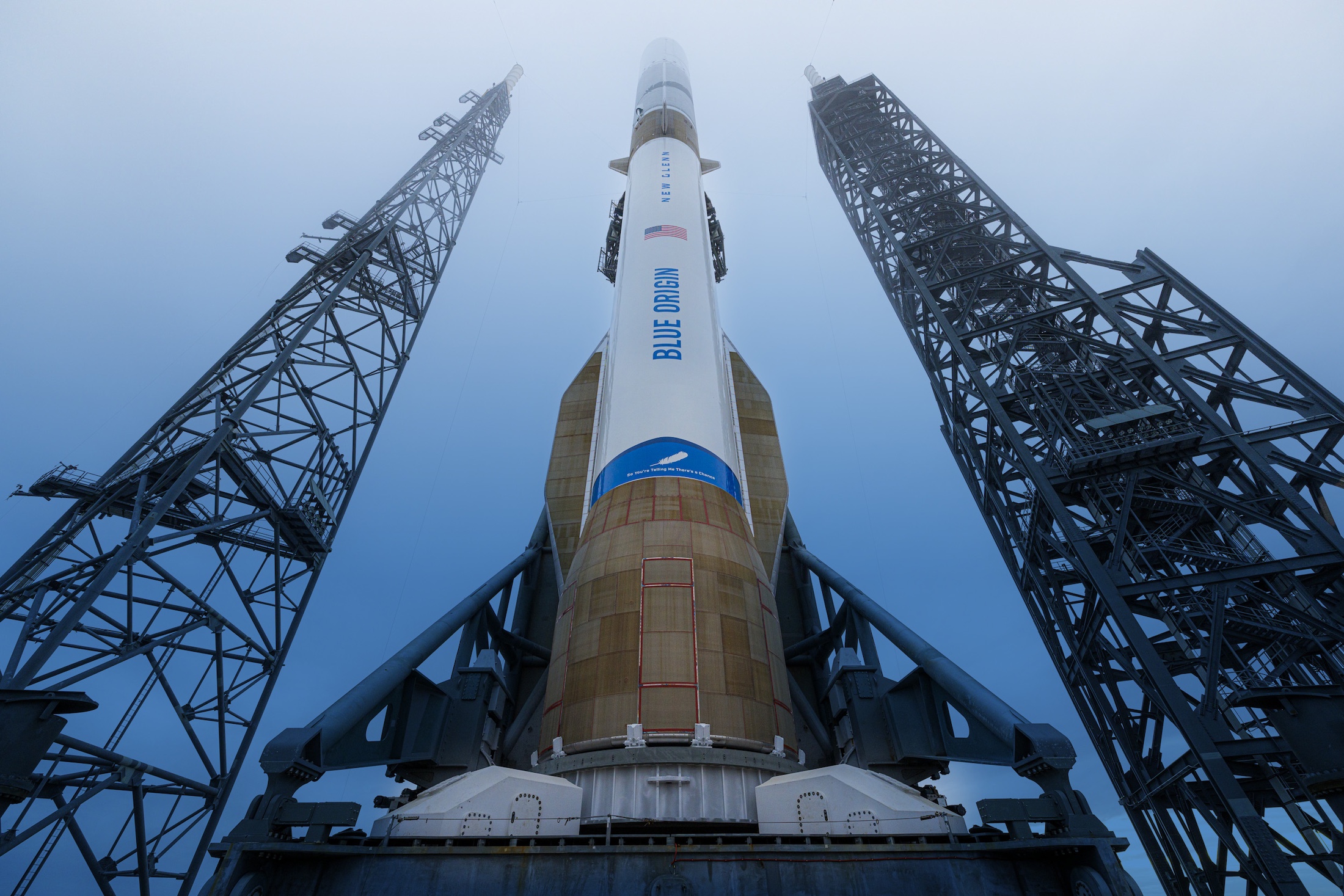
New Glenn on the pad. | Credit: Blue Origin
Rocket Lab
I see Rocket Lab as the little brother of the big two space industry competitors, primarily because of the absolutely minuscule Electron rocket.
Indeed, Rocket Lab has cornered a niche, but seemingly lucrative, side of the space industry. Where SpaceX and Blue Origin have gone big, Rocket Lab has gone small. By manufacturing smaller, lighter rockets, the company has made access to Earth orbit cheaper for companies that don’t need all the fairing space offered by competitors.
Smallsats, as they are known, are comparatively tiny satellites that previously had to share a ride with other space-bound payloads. This meant that a smallsat had to go into an orbit that may not necessarily be optimal for whatever operations they are performing, as the cost to charter your own launch vehicle was too steep. Rocket Lab provides this service at a reasonable price with their design and manufacturing approach.
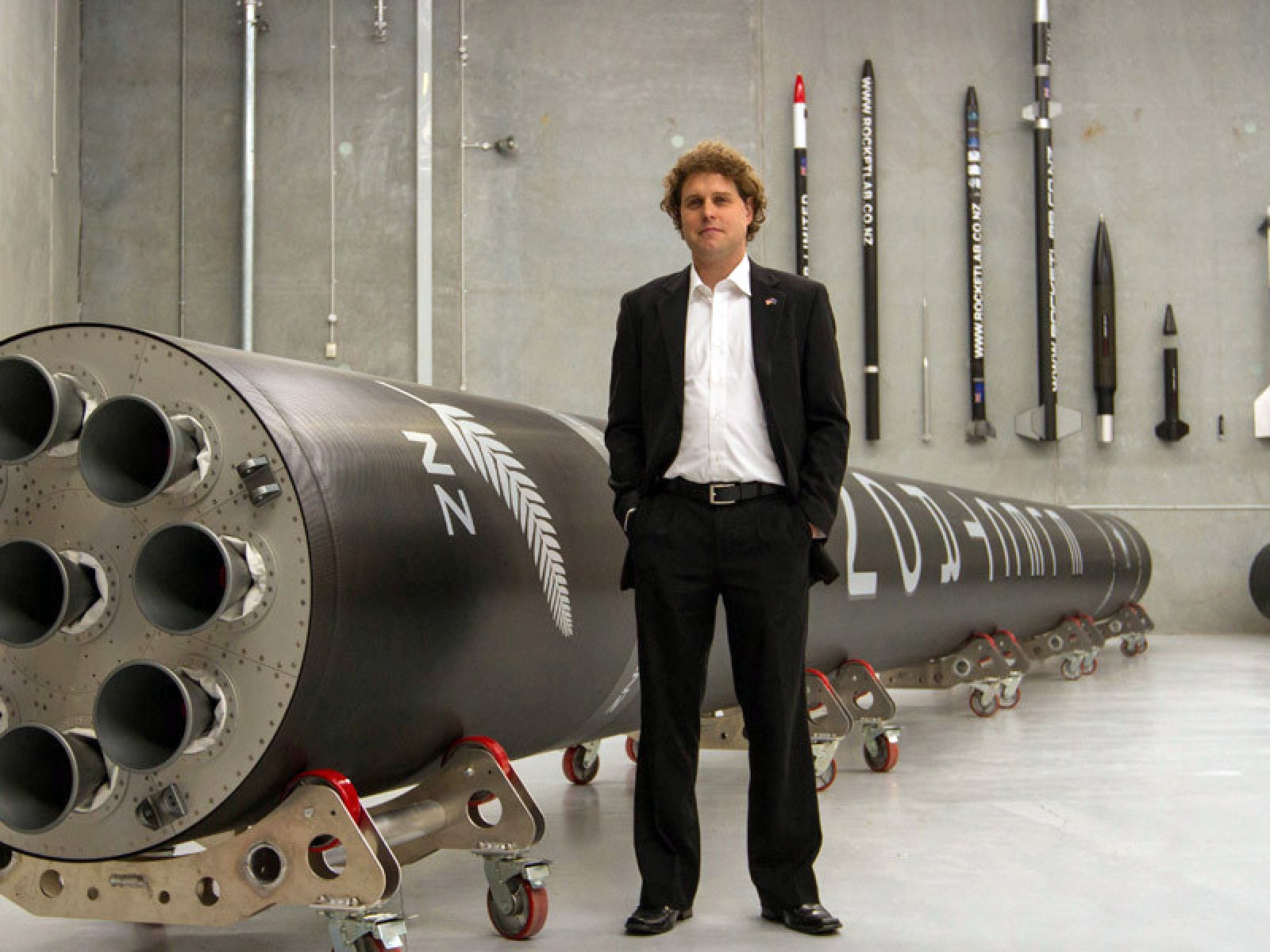
Peter Beck with an orbital class Electron rocket. | Credit: Rocket Lab
Launching out of New Zealand, Electron is currently the workhorse of Rocket Lab. Featuring a carbon fibre body and 3D printed, electrically powered Rutherford engines, the rocket has become the go-to option for many smallsat companies. I think its also really cute. Tiny rockets are cute.
Rocket Lab are also an ambitious bunch.
Currently slated for test flights this year, the next big launch vehicle for the company is Neutron , which aims to be largely re-usable. By boosting a small second stage up to a sufficient speed and altitude, Neutron aims to re-use the entire first stage and fairing assembly by returning to the launch site and landing, much like Falcon 9.

A render of the proposed Neutron launch vehicle, deploying the second stage. | Credit: Rocket Lab
Also on their to-do list involves their proposal for NASA’s Mars sample return mission. Due to budget constraints, this mission, originally planned to be a collaborative effort between NASA and ESA, has opened itself up for commercial input in the form of awarding a contract to the best proposals.
Rocket Lab has thrown their hat in the ring, and hopes to impress with their concept; a multi-launch network of satellites, return capsules and lander in order to retrieve the samples already collected by the Perseverance rover.
Returning samples from Mars has been a decades long ambition of space agencies all over the globe, and the insights we could gleam about the history and makeup of the Martian surface by bringing samples back to Earth are exciting to think about. If Rocket Lab were the ones to accomplish this feat, it would be a huge badge of honour.
There’s More!
That’s the three I wanted to bring up today, as an introduction for the layperson. I mentioned Firefly Aerospace at the start of this article, and they are one of many more space companies that are worth looking into. It’s an exciting time to be a space fan, and with so many new names on the landscape of this industry, only time will tell who will become the next big thing.
See you next week!
 Weekly Voyager
Leave a comment